

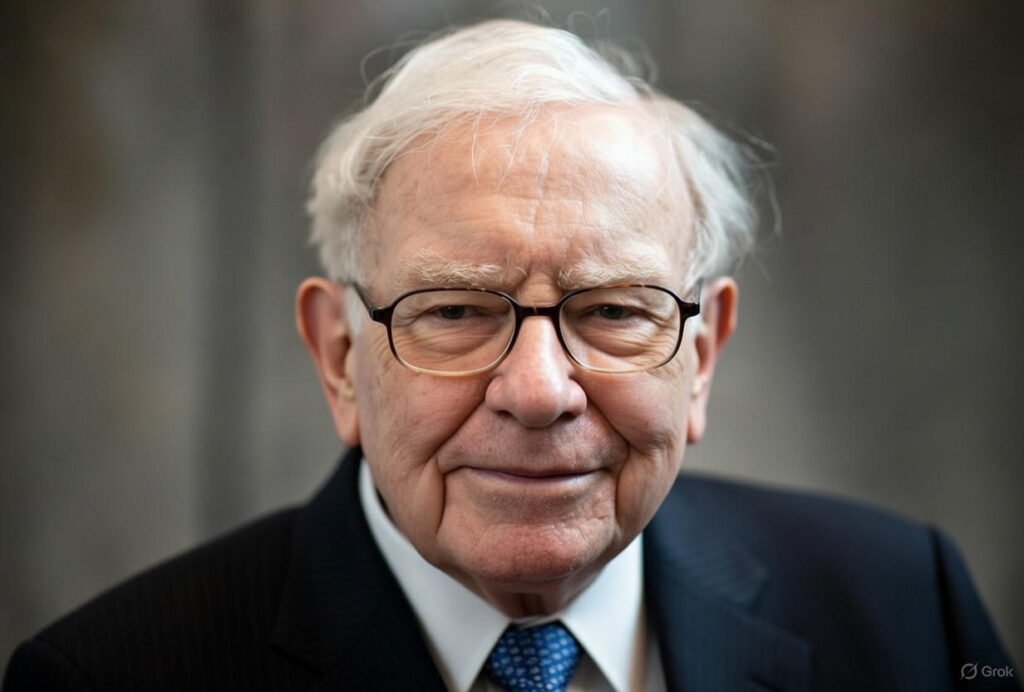
Lede: Why “boring” is the hidden advantage
Most people think wealth is made by spotting the next big thing early. Warren Buffett’s story is the opposite: he wins by doing the same simple things again and again buying strong businesses, avoiding obvious mistakes, and letting time do the heavy lifting. The “boring” part matters because boring is repeatable. And in money, repeatable beats dramatic.
The Buffett myth vs. the Buffett method
The myth says Buffett is a wizard who always knows what the market will do next. The method is more practical: he doesn’t try to predict headlines. He tries to buy pieces of businesses he understands, at sensible prices, and then hold them long enough for compounding to work. That’s not flashy—but it’s a system, and systems outperform vibes.
Rule #1: Don’t lose money—what it actually means
When Warren Buffett says “don’t lose money,” he’s not talking about a stock dropping for a week. He’s talking about permanent damage, buying something so risky or overpriced that you may never recover your money. For an everyday investor, this means avoiding debt-fueled investing, hype trades, and companies you can’t explain in one sentence. Real safety isn’t perfect timing—it’s smart risk control.
Buy businesses, not tickers
A stock is not just a price moving on an app. It represents a business that sells something to real people. Buffett asks: Does the company make steady profits? Do customers keep coming back? Can it raise prices without losing customers? If you can’t describe how a company earns money, you’re not investing—you’re guessing.
The “circle of competence” test
Warren Buffett doesn’t try to be smart about everything. He stays in his “circle” areas he understands well enough to judge what’s real and what’s hype. For you, this could mean industries you see closely: retail, banking, telecom, food brands, or tools you use daily. The trick is honesty: it’s better to miss an opportunity than to win a lottery once and lose discipline forever.
The moat idea—how winners stay winners
A “moat” is simply a reason a business stays strong even when competitors try to copy it. Think: a trusted brand, a massive distribution network, switching costs (it’s annoying to change), or scale that makes the company cheaper and faster. The bigger the moat, the harder it is for rivals to steal customers. Warren Buffett loves moats because they protect profits for years, not weeks.
Price matters: quality is great—overpaying isn’t
Even the best business can be a bad investment if the price is too high. Overpaying is like buying a great phone at 3× its real value you’ll feel regret no matter how good it is. Buffett looks for a “margin of safety,” meaning he wants room for mistakes. This is how boring investors survive: they don’t need perfection, they need sensible.
Time is the strategy: compounding needs quiet
Buffett’s real weapon is time. Compounding is when your money earns returns, and then those returns start earning returns too. But it only works if you stop interrupting it with constant buying and selling. Most investors don’t fail because they’re dumb, they fail because they can’t stay calm long enough for the math to work. Buffett treats holding as a skill.
Cash and optionality: why Buffett keeps dry powder
People love being “fully invested,” but Buffett often keeps cash because cash buys freedom. It lets you handle emergencies without selling at a bad time. It lets you buy when markets panic and good assets get cheaper. For you, “cash” means two things: an emergency fund and not investing money you might need next month. Optionality is power.
The invisible superpower: temperament over intelligence
Warren Buffett isn’t famous because he’s emotional, he’s famous because he’s stable. Temperament is your ability to stay rational when everyone is excited or scared. When the market is booming, temperament stops you from FOMO. When the market is crashing, temperament stops you from panic-selling. This is why “boring” wins: calm decisions beat clever predictions.
A simple “boring wins” portfolio framework
A clean way to copy the spirit of Buffett is to build a strong “core” and keep the “fun” small. The core can be diversified long-term investments (many people use broad index funds). Then, if you want, a small “satellite” portion can be a few businesses you genuinely understand. The rule: if a single stock falling would wreck your life, your plan is too aggressive.
Common mistakes Buffett avoids (and most people don’t)
Buffett avoids the traps that look normal online: overtrading, chasing tips, using leverage, buying because of a viral story, and ignoring fees and taxes. He also avoids the ego trap, needing to be right. The biggest money mistakes often start as emotional decisions that people later try to justify with “logic.”
A mini action plan you can start this week
- Write your goal: “I’m investing for ___ years for ___.”
- Automate a monthly amount so you don’t rely on motivation.
- Build/maintain an emergency fund first.
- Create a rule: “I don’t buy anything I can’t explain in 60 seconds.”
- Limit checks: look at your portfolio less often.
- Keep a one-page “why I bought this” note to protect you from panic.
Closing: The point of wealth is freedom, not adrenaline
Buffett’s playbook is boring because it’s designed for real life. It’s meant to work through good years, bad years, and chaotic headlines. The goal isn’t to feel smart this week, it’s to build freedom over time: more choices, less stress, and a future you don’t have to hustle for every day. Boring isn’t a weakness. In investing, boring is often the strategy.
FAQs
1) What is Warren Buffett’s investing style in one line?
He buys strong, understandable businesses at sensible prices and holds them for a long time.
2) Why does “boring” investing usually win?
Because boring is consistent. Consistency + time = compounding, and compounding is what creates big results.
3) Does Buffett trade daily or time the market?
No. He focuses on long-term business value, not short-term price moves.
4) What does “don’t lose money” actually mean?
Avoid permanent loss—like buying hype, taking big debt, or overpaying—rather than worrying about normal ups and downs.
5) What is a “moat,” in simple words?
A moat is a company’s unfair advantage that keeps competitors from easily stealing its customers or profits.
6) What is the “circle of competence”?
It’s the set of businesses you truly understand. Buffett stays inside it to avoid confident guessing.
7) Can beginners follow Buffett without picking individual stocks?
Yes. Many people use diversified index funds as a simple, low-stress way to invest long-term.
8) How long should you hold an investment, Buffett-style?
Ideally years—not weeks. If you wouldn’t be okay owning it through a rough patch, it’s probably not a good fit.
9) Why does Buffett keep cash sometimes?
Cash gives safety and flexibility—so you can handle emergencies and buy opportunities when prices drop.
10) What’s the biggest mistake most new investors make?
Chasing hype and switching strategies too fast—usually driven by fear or FOMO.
11) Is it okay to invest if I’m starting with a small amount?
Yes. Small amounts matter because the habit matters. Starting early is more powerful than starting big.
12) What’s the simplest “Buffett-like” habit to start today?
Automate investing monthly, avoid impulsive buys, and hold quality investments longer than your emotions want to.
Key Takeaway
Warren Buffett’s “boring” wealth playbook isn’t about predicting markets—it’s about protecting your downside, buying what you understand, paying a sensible price, and giving compounding enough time to work. The real edge is not genius, it’s discipline + patience + consistency. If you can master your behavior (ignore hype, avoid panic, keep investing), you’ll do what most people can’t and that’s why boring wins.
Read other articles at: https://InfoPillsTV.com