Lede: The empire behind the voice
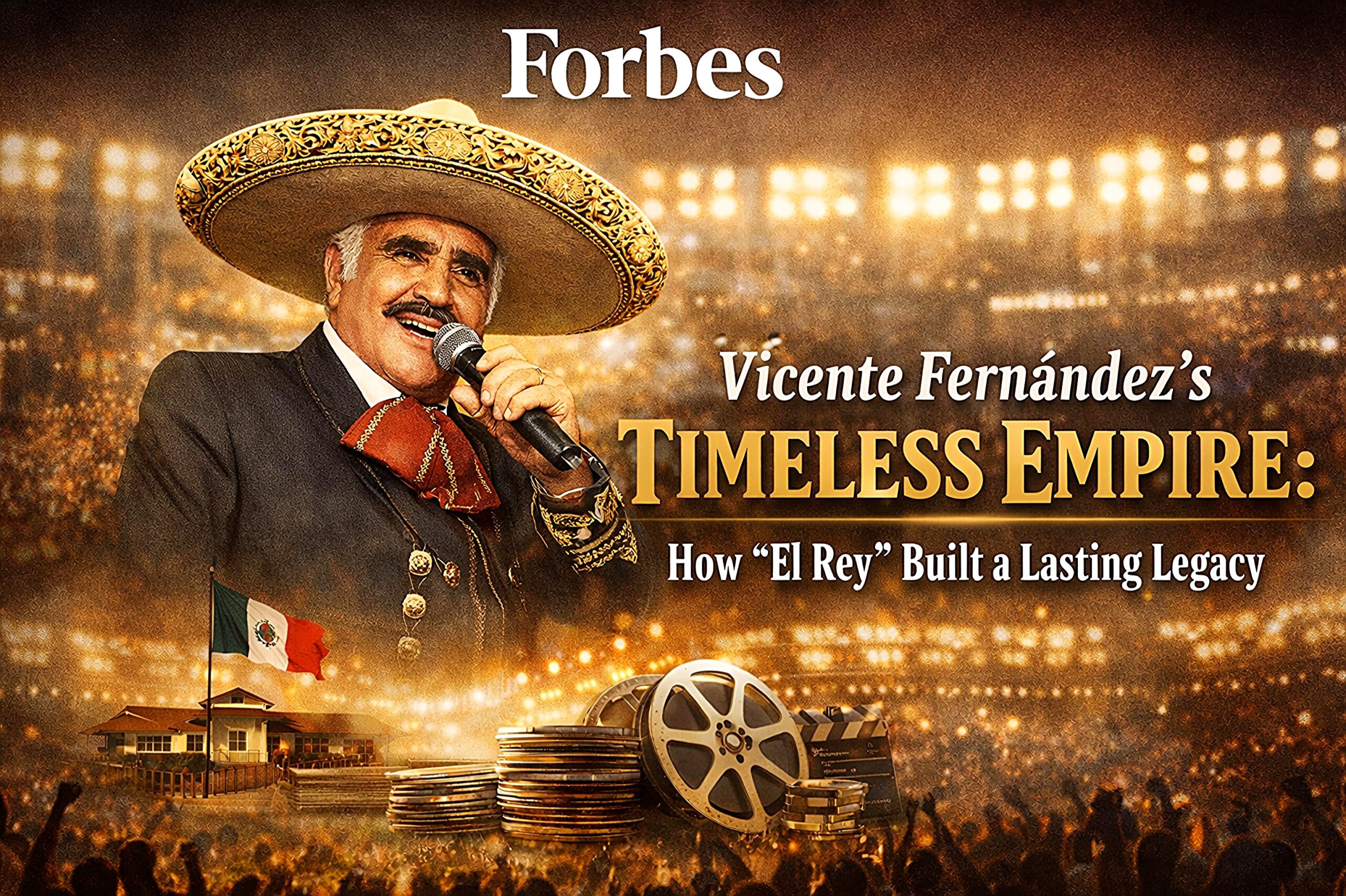
Vicente Fernández didn’t just perform ranchera music, he carried it like a flag. The hat, the suit, the stance, the unshakeable conviction in his delivery: it all signaled something bigger than a setlist. Over decades, “El Rey” became a trusted ritual for millions, the kind that shows up at weddings, road trips, family kitchens, and late-night heartbreak. Grammy+1
When an artist becomes a cultural habit, that habit becomes durable value. Vicente Fernández built an “enduring empire” by pairing authenticity (a brand people believed) with scale (a career that reached stadium size) and stewardship (a legacy managed like an asset, not a souvenir).
The Vicente Fernández blueprint in one sentence
Think of the blueprint as a flywheel: a clear identity → massive live performance credibility → catalog that keeps compounding → careful legacy management—and each part strengthens the next. His career breadth is well documented: widely cited figures include 100+ albums and 150+ films, illustrating how he expanded from music into a broader entertainment footprint. Wikipedia
From working-class roots to national symbol
Most icons start as a voice in the crowd. Fernández’s early story matters because it explains his “market fit”: he didn’t feel manufactured. He felt earned. That perception—“he’s one of us”—isn’t sentimentality; it’s trust, and trust is the rarest currency in entertainment.
As his reputation grew, the brand moved from popular to symbolic. When a performer becomes a national reference point, the audience stops being just fans, they become stewards of the myth. They hand it down. That’s how a career becomes an inheritance. Grammy
The “El Rey” brand: identity as an asset
Fernández’s brand was not a logo, it was a promise. The charro image, the mariachi tradition, the emotional honesty in the songs: it created instant recognition and made the experience feel “safe” across generations. Families could play Vicente in front of elders and kids and feel like they were sharing something respectful, not risky. Wikipedia+1
This is the underappreciated genius: consistency. In a world where artists constantly reintroduce themselves, Fernández doubled down on what people came for, voice, pride, heartbreak, honor, and that predictability made his name a reliable “choice” in culture. Reliability scales. Grammy
Live performance economics: scale, stamina, and demand
Touring is where legends often turn fame into real enterprise. Live shows don’t just generate revenue; they create proof—proof of demand, proof of relevance, proof that the artist is still the main event. Fernández took that logic to its highest form with his farewell concert at Mexico City’s Estadio Azteca in 2016, a defining “capstone” moment for the brand. Wikipedia+1
The real economic lesson is pricing power and endurance. When an artist becomes tradition, demand becomes less trend-dependent. Even casual listeners show up because it feels like a cultural appointment. That’s how stadium-scale legacy gets built—one “you had to be there” night at a time. Hollywood Reporter
Catalog power: the long tail that compounds
A great catalog behaves like evergreen IP: it earns again and again whenever culture “rediscovers” it. Fernández’s music doesn’t require context to hit—the emotion is the context. That makes it ideal for the modern era of algorithmic discovery, where one clip, one cover, or one tribute can send millions back into the back catalog. Grammy+1
Catalog value grows when it’s protected. The more carefully a legacy is licensed and presented, the more it keeps its premium feel. In business terms: you’re managing scarcity, quality, and reputation—so the catalog stays “special,” not overused. Grammy
Media, film, and myth-making
Fernández expanded beyond music into film and production, which matters because it widened the funnel. Movies turn an artist into a character; characters travel further than songs. People may forget a track title, but they remember the persona—the principles, the bravado, the tenderness. Wikipedia
This kind of cross-media presence also builds familiarity at scale. And familiarity, repeated over years, becomes emotional ownership: audiences feel they “grew up with him.” That feeling is one of the strongest drivers of long-term loyalty. Grammy
The family business: succession, stewardship, and control
Legacy isn’t automatic. It’s managed. The questions after a superstar era are practical: Who controls decisions? Who protects the brand voice? What gets licensed, where, and why? Fernández’s legacy is closely tied to family stewardship, including a continuing public association with his ranch, Los Tres Potrillos, which is also part of his personal mythology and memorial narrative. Wikipedia
The strategic tension is always the same: preserve authenticity while allowing modern access. Do you keep things traditional and risk fading from younger feeds—or do you modernize and risk breaking the spell? The best legacy management does both: it updates distribution, not identity. Grammy
Cultural capital: the hidden balance-sheet item
Cultural capital is the value of being the default reference. Vicente is a soundtrack to identity—especially for Mexican and Mexican-American audiences—because ranchera music often carries belonging, memory, and pride. That cultural “placement” is powerful: it means the artist isn’t just entertainment; he’s a symbol people return to when they want to feel grounded. Grammy
And here’s the business conversion: symbols drive attention, attention drives listening, and listening drives catalog longevity. The cultural weight becomes economic weight without needing constant reinvention.
Modern relevance: why “El Rey” still travels
Legends stay modern when their work remains usable. Short clips, tributes, family playlists, covers, and big cultural moments keep opening new doors. Even after retiring from performing, he continued recording, which helped keep the catalog “alive” rather than frozen in a past era. Wikipedia+1
The key insight: you don’t have to chase trends if you’ve become a tradition. Algorithms may change, but human needs—love, pride, grief, resilience—don’t. That’s why his songs keep finding new listeners.
The strategic takeaway for creators and executives
If you’re building a brand (artist or otherwise), Fernández offers a rare playbook:
- Be instantly describable. “El Rey” is a positioning statement, not just a nickname.
- Scale trust before you scale experimentation. Consistency creates mass adoption.
- Treat your catalog like infrastructure. Quality control and smart licensing protect long-term value.
- Build the flywheel. Live moments create stories; stories feed discovery; discovery feeds the catalog. Hollywood Reporter+1
FAQ
Why is Vicente Fernández called “El Rey”?
He’s widely known as “El Rey de la Música Ranchera” because of his towering influence in ranchera/mariachi and his cultural-icon status. Wikipedia+1
What makes Vicente Fernández’s music catalog so valuable long-term?
Longevity comes from timeless themes, multi-generational trust, and repeated rediscovery through modern platforms and tributes—creating a compounding “long tail.” Grammy+1
How do legacy artists keep earning after peak touring years?
Catalog consumption (streaming/physical), licensing, and cultural moments can keep demand high—especially when the brand is protected and the music remains widely usable. Grammy
What can modern artists learn from Vicente Fernández’s career strategy?
Make identity crystal-clear, build trust through consistency, turn live performance into proof of demand, and manage your catalog/brand like long-term assets.
Closing: The legacy that behaves like a business
Vicente Fernández’s empire didn’t last because it was loud; it lasted because it was believable. He built a voice people trusted, then scaled it into a body of work that still meets audiences where they are—at celebrations, at loss, and in the quiet hours when a song feels like company. Grammy+1
Read other articles at: https://InfoPillsTV.com