
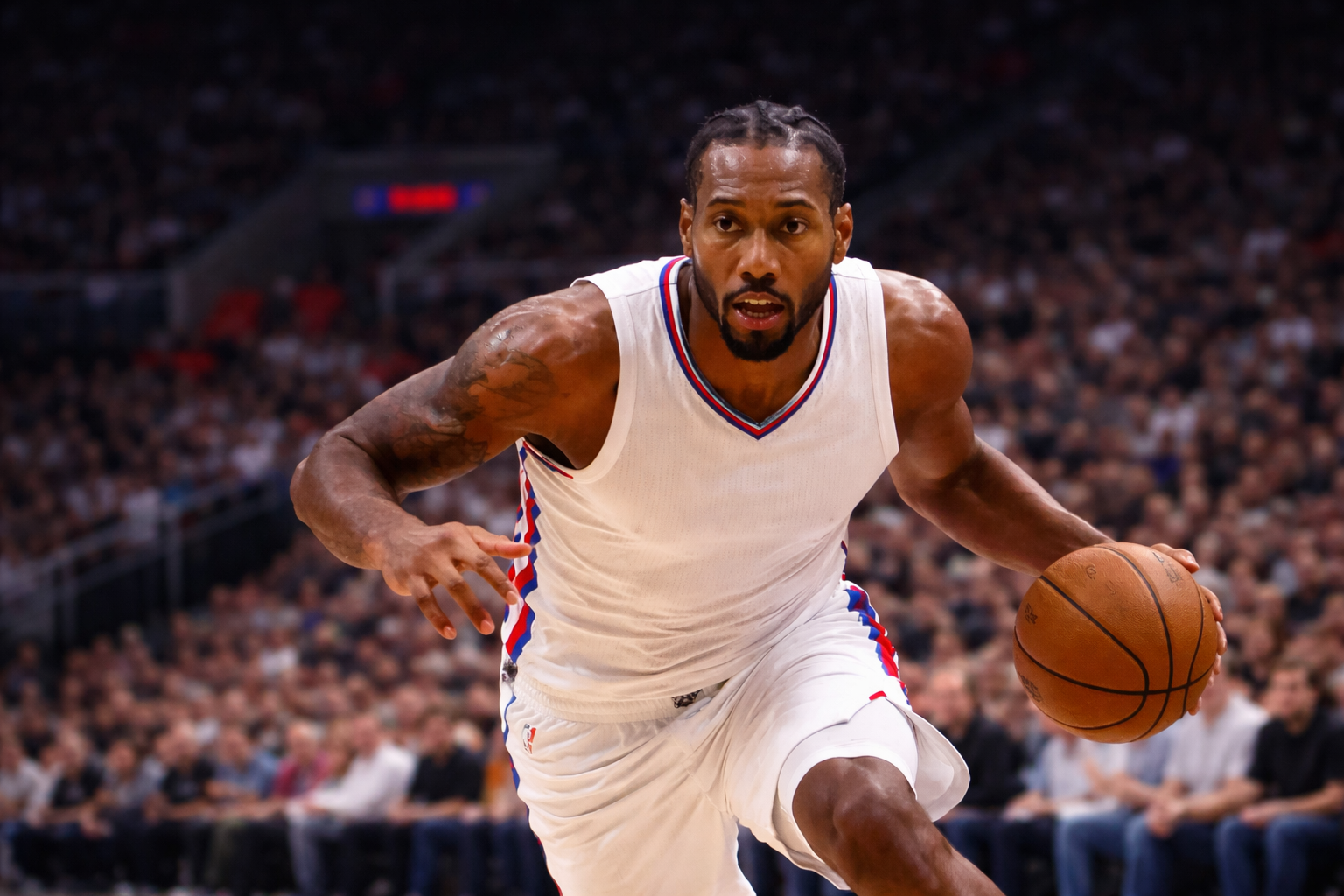
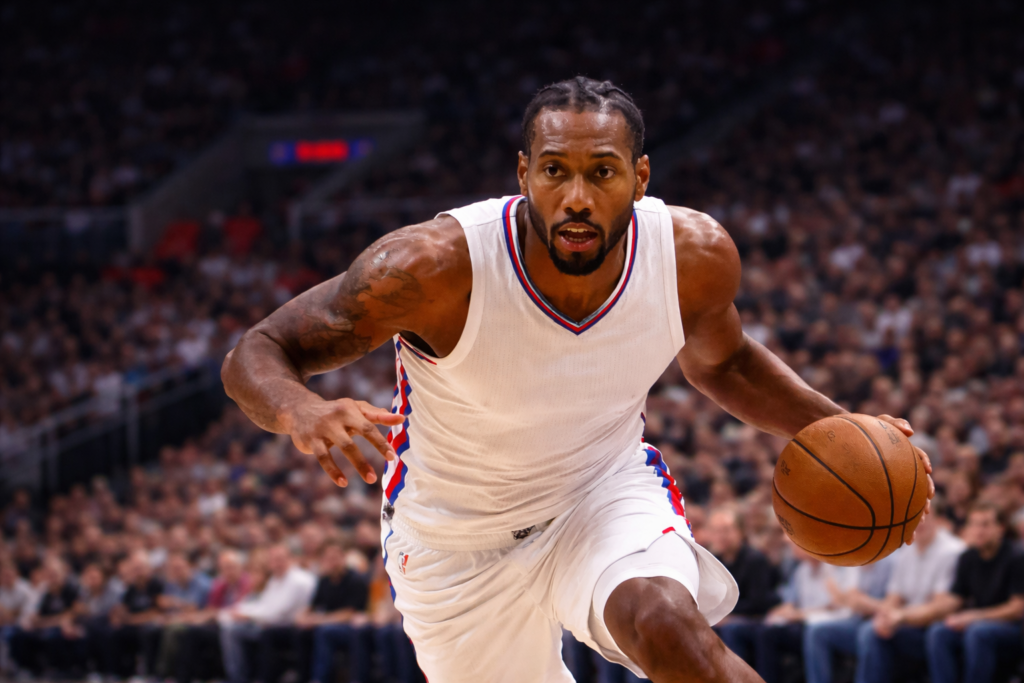
Lede: The loudest players don’t always decide the loudest moments
In the NBA playoffs, the game gets tighter. Defenses know your favorite moves. Referees allow more physical play. And every mistake costs more because both teams are locked in. That’s why the player who stays calm and keeps making smart choices, often becomes the difference. Kawhi Leonard isn’t usually the noisiest star on the floor, but in big playoff moments, his impact shows up in the most important place: who wins the possession.
The “quiet advantage” defined
“Kawhi Leonard’s quiet advantage” is not about being shy or silent. It’s about playing with control instead of chaos. He doesn’t rush shots, doesn’t get baited into bad decisions, and doesn’t waste energy on extra moves. In the playoffs, where one or two possessions can flip a game, this steady style becomes a superpower. His opponents might look flashier, but he often plays cleaner basketball, fewer errors, better shots, better stops.
The skill: control of pace, space, and decision-making under pressure
The skill that tilts playoff games is control. Control means he can slow down when the defense is speeding him up, and speed up only when it actually helps. He controls pace by not panicking. He controls space by getting to the spots on the court where he shoots best. And he controls decisions by choosing the right option—shoot, pass, or attack, based on what the defense gives him. When pressure rises, many players get impatient. Kawhi usually gets simpler.
How the skill shows up on offense
On offense, Kawhi’s control looks like smart, repeatable actions. He doesn’t need ten dribbles to create a shot. He often uses one or two moves to reach a “good area” on the floor like the midrange near the elbows or a lane to the rim. In playoffs, those areas matter because defenses take away easy shots. Kawhi also protects the ball. A rushed pass or careless dribble becomes a fast-break for the other team. He reduces those mistakes, which is huge in a seven-game series.
Getting to high-value areas without forcing
“High-value areas” means places where a player can score consistently even when the defense is strong. In playoffs, the defense tries to push stars into uncomfortable shots. Kawhi counters that by using his strength, balance, and footwork to get to his spots without fighting the game. Instead of forcing a tough shot early, he patiently moves, bumps for position, and shoots when he’s stable. That stability is the difference between a bad shot and a made shot.
Shot quality over shot volume
A lot of stars try to “shoot their way out” of trouble. In the playoffs, that can backfire. Kawhi is more focused on shot quality—taking shots that have a good chance to go in. He doesn’t need to take 30 shots to feel involved. He needs the right 18–22. When he chooses good shots, his scoring becomes more reliable, and his team gets better spacing because defenders have to respect him.
Turnover discipline: ending possessions with an attempt
One of the simplest playoff truths is: a shot is better than a turnover. Even a missed shot can lead to an offensive rebound or set defense on the other end. A turnover often leads to a fast, easy basket for the opponent. Kawhi’s advantage is that he usually ends possessions with a shot, not a mistake. He values the ball, uses strong hands, and avoids risky passes unless the defense forces him.
How the same skill powers his defense
Defense in the playoffs is not just about “trying hard.” It’s about timing and discipline. Kawhi’s defense has always been built on patience: staying in front, using angles, and attacking the ball at the right moment. Many defenders either foul too much or gamble too much. Kawhi often avoids both. He makes scorers uncomfortable without gifting them free throws.
Staying attached without fouling
In playoff games, free throws are like “free points.” A defender who fouls a lot helps the offence. Kawhi’s control shows up in how he contests shots without jumping wildly or reaching at the wrong time. He stays close, uses his body position, and makes the shooter work without sending them to the line. That’s winning basketball that doesn’t show up loudly on highlights.
Timing: hands, angles, and when to gamble
Kawhi’s hands are famous, but the bigger story is when he uses them. He doesn’t swipe early and open up a drive. He waits until the ball is exposed, then strikes. He also uses angles: guiding a scorer toward help defense or away from their comfort zone. In the playoffs, that kind of timing can ruin an opponent’s rhythm and force them into tougher shots.
Removing Plan A, surviving Plan B
Great playoff defense is like a chess match. Your goal is to take away the opponent’s first choice (Plan A). If they adjust (Plan B), you stay solid and don’t fall apart. Kawhi’s teams often look organized because he plays within the plan. He doesn’t chase steals if it breaks the defense. He doesn’t get pulled out of position for one flashy play.
The playoff tax: why most stars lose efficiency
In the regular season, stars can score on talent alone. In the playoffs, opponents scout everything—your favorite move, your passing habits, your weak spots. That is the playoff tax: it becomes harder to score efficiently. Kawhi’s control helps him pay less tax. His game is built on fundamentals—balance, footwork, strength, and simple reads—so it’s harder to “scheme him out” completely.
The “hidden math” of winning possessions
Playoff games are often decided by small numbers: one extra turnover, two extra fouls, three missed box-outs. The hidden math is simple: mistakes are expensive. A forced shot is often a wasted possession. A foul gives the opponent free points and may put your team in trouble. A careless turnover can become a fast-break dunk. Kawhi wins by reducing these giveaways and creating small advantages that add up.
What teams try to take away and how he counters
Defenses try to crowd Kawhi’s spots, send help, and force him into tough passes. They also switch defenders to keep a fresh body on him. Kawhi’s counter is usually calm: if help comes, he takes the open space. If a smaller defender switches onto him, he uses strength and positioning. If a bigger defender is slow, he uses footwork. The key is that he doesn’t rush. He reads the defense like a test question then answers it.
The durability question without the drama
In modern NBA conversations, availability matters. The playoffs reward stars who can stay on the floor. Kawhi’s story includes managing his body and choosing smart pacing. The “quiet advantage” also means knowing when to push and when to conserve energy. It’s not quitting, it’s strategy. The goal is to have something left in the fourth quarter and in Game 6 and Game 7 situations.
What younger wings can copy tomorrow
You don’t need Kawhi’s size to learn from his habits. Young players can copy the controllable parts: take fewer bad shots, use fewer dribbles, protect the ball, and defend without fouling. Watch how he gets to a spot with one move instead of three. Watch how he stays balanced on jumpers. Watch how he keeps his hands ready on defense. These habits work at every level because they are based on discipline, not luck.
Bottom line: the skill that scales in the playoffs
Kawhi Leonard’s quiet advantage is control—control of pace, space, and decisions. In the playoffs, when the game becomes harder and emotions run higher, control becomes a weapon. It’s the difference between forcing a moment and owning it. And that’s why, even without loud celebration or constant talk, Kawhi can still tilt playoff games: he repeatedly wins possessions when they matter most.
FAQs
What is Kawhi Leonard’s “quiet advantage” in the playoffs?
It’s his control, he stays calm, takes high-quality shots, avoids costly mistakes, and defends with discipline. In playoff basketball, that steady style often beats flashy plays because every possession matters.
What is the one skill that still tilts playoff games for Kawhi?
The key skill is decision-making under pressure. Kawhi reads the defense, chooses the simplest winning option, and doesn’t get rushed into bad shots or turnovers.
Why does Kawhi Leonard’s game translate so well to playoff basketball?
Because his game is built on fundamentals—footwork, balance, strength, and smart shot selection. Those things don’t disappear when defenses tighten and opponents scout every move.
How does Kawhi create offense without looking fast or flashy?
He uses efficient moves, often one or two dribbles to get to his favorite spots. He doesn’t waste energy, and he rarely forces a shot just to “be the hero.”
What makes Kawhi Leonard so difficult to guard in a seven-game series?
He adjusts quickly. If teams take away one option, he calmly shifts to the next—post-ups, midrange pull-ups, driving lanes, or kick-out passes without playing rushed.
How does Kawhi’s defense impact playoff games?
He defends without gifting free points. That means staying in front, contesting without fouling, and using timing to disrupt shots and passes. Playoff defense is about removing easy options, and Kawhi does that well.
Does Kawhi Leonard rely too much on midrange shots?
In the regular season, teams prefer threes and layups. But in the playoffs, defences often take those away. A reliable midrange game becomes a pressure-release valve and Kawhi’s is one of the most dependable.
What can young players learn from Kawhi Leonard?
A lot: protect the ball, take better shots, use fewer dribbles, stay balanced, and defend without fouling. Kawhi’s biggest strengths are habits, not tricks.
Is Kawhi Leonard still a “playoff ceiling-raiser” today?
When he’s on the floor and healthy, he can be—because his style creates value that scales in big games: fewer mistakes, better shot quality, and strong two-way impact.
What’s the simplest takeaway from Kawhi’s quiet advantage?
Playoff basketball rewards the player who can win the next possession over and over without panic. Kawhi’s edge is making hard playoff possessions look routine.
Read other articles at: https://InfoPillsTV.com