
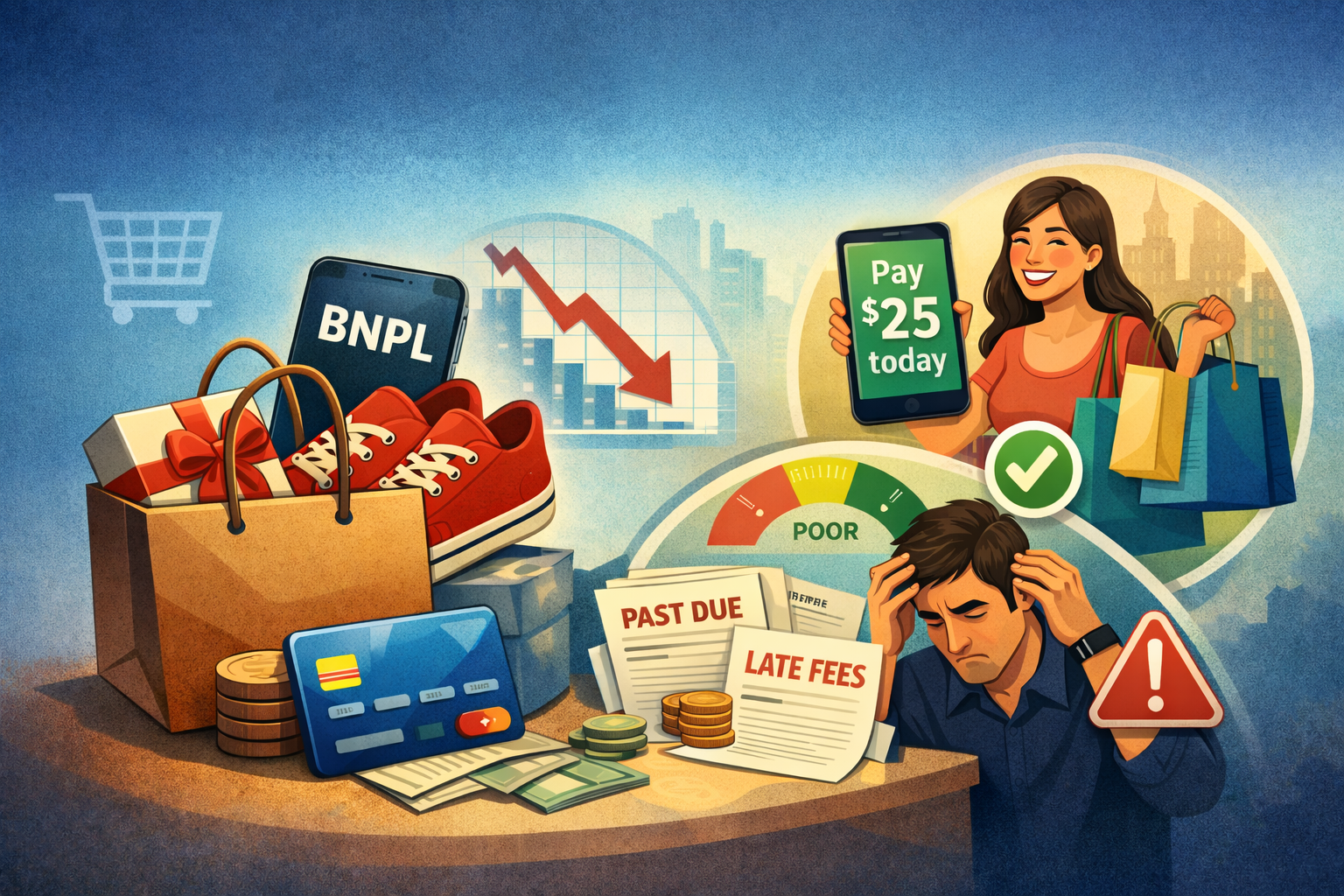
“Pay just $___ today.”
That one line at checkout is buy now, pay later is everywhere. It turns a big total into a small first payment so a “maybe later” quickly becomes “okay, I’ll get it now.”
Used carefully, buy now, pay later can help you manage cash flow. Used casually, it can quietly turn into a pile of bills you didn’t plan for. Here’s the simple breakdown—no jargon, no drama—just what it is, why people love it, and where it goes wrong.
What “buy now, pay later” actually means
At its core, it is a short-term loan built into shopping. Most plans work like this:
- You pay a part upfront (often 25%).
- You pay the rest in a few installments over the next weeks or months.
- Many plans show “0% interest,” but late fees can apply if you miss a payment.
So it isn’t free money. It’s delayed payment with rules.
Consumer snapshot: who’s using it (US + Europe)
This payment option has moved into the mainstream, and the numbers reflect that:
- United States: About 15% of adults reported using BNPL in the past 12 months (2024 survey year).
Different surveys can show different figures depending on how they define “use.” For example, a New York Fed–reported survey found roughly 20% in late 2023. - Europe: Cross-country “% of people” statistics are less consistent across the EU, but Europe is often tracked through share of e-commerce transactions. One benchmark estimates BNPL at around 8% of e-commerce transactions in Europe in 2024.
- UK (useful comparison point): UK regulator research reported 1 in 5 UK adults (20%) used BNPL at least once in the 12 months to May 2024.
Why millions are using buy now, pay later
1) It feels lighter than a credit card
A credit card feels like “debt.” Buy now, pay later feels like “a plan.” The psychology matters.
2) The payment looks small, so the purchase feels safe
A $100 item feels expensive.
“$25 today” feels manageable.
That one simple shift in framing can push people to spend more.
3) It’s frictionless
No long forms. No awkward bank visit. It feels normal to checkout button, not a loan.
4) It fits modern life
Irregular income, rising prices, and surprise expenses make budgets unpredictable—so many people turn to installment payments to bridge short-term timing gaps.
Benefits vs risks (neutral comparison)
| Why people like it (benefits) | Where problems can show up (risks/limitations) |
|---|---|
| Spreads a purchase across a short schedule | Multiple plans can overlap and become hard to track (“stacking”) |
| Lower upfront cost makes budgeting feel easier | Late fees can apply if a payment is missed |
| Fixed installments can feel predictable | Returns/refunds may take time while installments still come due |
| Can be simpler than carrying a card balance | Credit reporting and score impact varies by provider/country |
| Fast checkout, low friction | Smaller “today” amounts can encourage impulse buying |
Where buy now, pay later goes wrong
1) The “stacking” problem: too many small plans at once
One plan might be fine. But then it becomes: shoes + headphones + gifts + skincare + groceries.
Each plan is small. Together, they become a monthly burden.
2) Missing one payment can cost more than you expect
Many people hear “0%” and assume “no consequences.” But late fees can add up. Also, some providers may pause your account or escalate collections if you repeatedly miss payments.
3) Returns can feel messy
With buy now, pay later, refunds may take time. Meanwhile, your next installment may still be due. That can create confusion like: “I returned it—why is my payment still charging?”
4) It can normalize impulse buying
This is the hidden danger: buy now, pay later reduces the “pain” of paying, which can make emotional spending easier. If you’re shopping when bored, stressed, or seeking a quick mood boost, it can quietly become your trigger
5) It can hide budget problems instead of fixing them
If you’re using buy now, pay later for essentials (like groceries or fuel), it may be a sign your monthly budget is already too tight.
When buy now, pay later is a smart tool
It can make sense when:
- The purchase is planned (not impulse).
- You already know the payment dates.
- The installments fit comfortably within your monthly budget.
- You’re buying something useful and durable (not a “temporary thrill”).
Smart examples:
- A needed appliance replacement
- A work tool
- A planned, budgeted purchase you were going to make anyway
A simple 5-question checklist before you click “buy now, pay later”
- Would I still buy this if I had to pay full price today?
- How many BNPL payments do I already have this month?
- What happens if I’m late (fees, restrictions, collection)?
- What happens if I return the item—how does refund timing work?
- Is this a need or a want?
If you hesitate on #2, pause. That’s the most common trap.
The bottom line
Buy now, pay later is popular because it reduces friction and lowers the upfront cost. For disciplined buyers, it can be a practical budgeting tool.
But it can go wrong when convenience turns into habit—when multiple plans pile up, payments get missed, or spending becomes emotional.
One line to remember: Buy now, pay later doesn’t make it cheaper. It only makes it easier to say yes.
FAQ
1) What is buy now, pay later?
Buy now, pay later (BNPL) is a payment option that lets you split a purchase into several installments. You usually pay a portion upfront, then the rest over the next few weeks or months.
2) How does buy now, pay later work?
At checkout, you choose BNPL, confirm your payment method, and follow a fixed schedule (for example, four equal payments). Payments are typically auto-charged on set dates.
3) Is buy now, pay later a loan?
In most cases, yes. It’s a form of short-term credit, even if it doesn’t look like a traditional loan.
4) Does buy now, pay later charge interest?
Many BNPL plans advertise 0% interest, but some plans can charge interest depending on the provider and repayment length. Late fees may apply if you miss a payment.
5) What happens if I miss a BNPL payment?
You may be charged a late fee, your account may be restricted, and you may have difficulty using BNPL again until the balance is settled. Repeated missed payments can lead to collection activity depending on the provider.
6) Can buy now, pay later hurt your credit score?
It depends on the provider and country. Some providers report payment behavior to credit bureaus, some don’t, and policies are evolving. Late payments may affect your credit if they’re reported or sent to collections.
7) Why am I still being charged after I returned an item?
Returns and refunds can take time to process. While the refund is pending, your next installment may still be due. Once the refund is completed, the provider should adjust the remaining balance based on their policy.
8) Is buy now, pay later safer than a credit card?
Neither is “always safer.” BNPL can be easier to manage for a single planned purchase with fixed payments. Credit cards can be safer for disputes and may offer stronger protections, but revolving balances can become expensive if you carry debt.
9) How many BNPL plans is too many?
There’s no perfect number, but risk increases when you have multiple plans overlapping. A simple rule: if you can’t quickly list your active BNPL payments and due dates, you’re likely taking on too many.
10) What’s the safest way to use buy now, pay later?
Use it only for planned purchases, keep the number of active plans low, set reminders before due dates, and avoid using BNPL for essentials if your budget is already tight.
Read other articles at: InfoPillsTV.com