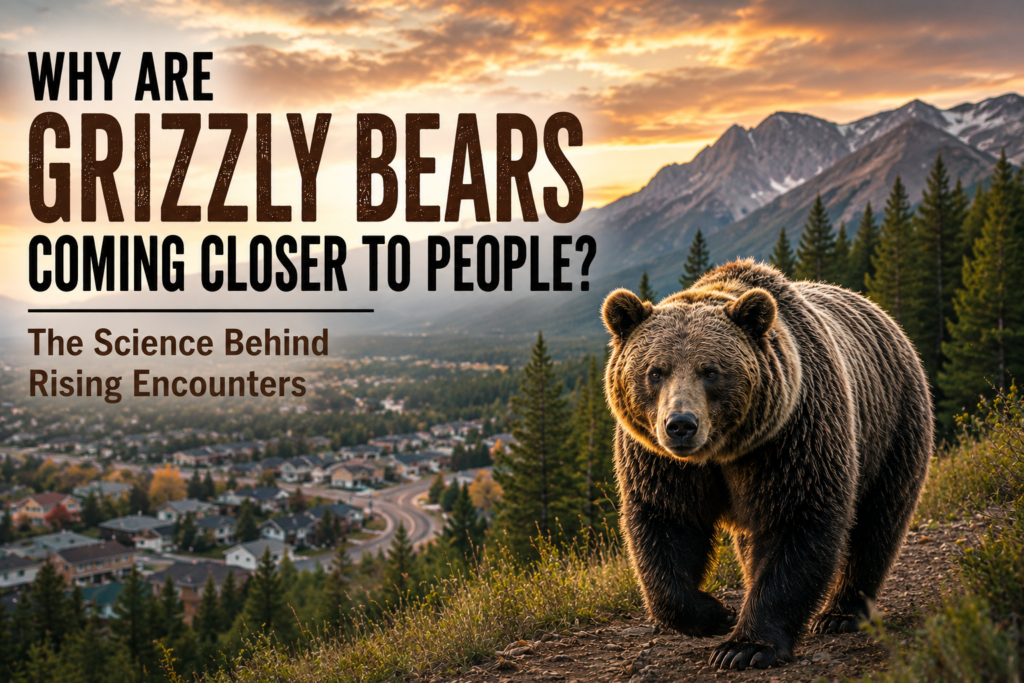
Imagine opening your front door for your morning coffee and finding a 600 pound grizzly bear calmly inspecting your garbage bin. It sounds like a scene from a wildlife documentary or perhaps a bear reviewing your weekly grocery shopping. But in parts of North America, this has become increasingly common. Why Are Grizzly Bears Coming Closer to People?
Every year, wildlife authorities in Canada and the United States receive thousands of reports of bears wandering into neighborhoods, campgrounds, farms, and even city outskirts. While these encounters can make headlines, they are actually part of a much larger story involving habitat changes, food availability, human expansion, and climate change.
The important question isn’t “Why are bears invading our towns?”
It’s “Why have our worlds begun overlapping so much?”
Let’s explore the science.
Grizzly Bears Prefer Wilderness Not Your Backyard
Despite their fearsome reputation, grizzly bears generally avoid humans. They rely on their remarkable sense of smell to detect danger from several kilometres away. In most situations, they choose to walk away long before people even notice them
Grizzly bears evolved to live across forests, alpine meadows, river valleys, and tundra. Their lives revolve around finding food while avoiding unnecessary risks.
Despite being an intelligent animal why are grizzly bears coming closer to people, suddenly appear near homes? The answer is surprisingly simple, “People have food”. Lots of it.
Food Is the Biggest Attraction
Wildlife experts consistently identify unsecured food as the leading reason bears enter human communities. A bear doesn’t distinguish between:
- overflowing garbage bins
- barbecue grills
- compost piles
- fruit trees
- bird feeders
- livestock feed
- pet food
To a grizzly, these are simply calorie-rich buffets. Because bears need enormous amounts of energy before winter hibernation, they naturally choose the easiest food source available.
Unfortunately, once a bear repeatedly finds food in neighborhoods, it often returns again and again.
Hyperphagia: When Bears Become Eating Machines
One fascinating biological process explains much of this behaviour. It’s called hyperphagia.
During late summer and autumn, grizzly bears enter an intense feeding period where they may consume 20,000 calories or more per day. Their bodies prepare for months of hibernation by rapidly storing fat.
At this stage, almost everything becomes potential food. That includes berries, fish, insects, roots and unfortunately, human garbage.
Wildlife biologists describe this period as the time when bears become extraordinarily motivated to seek high-calorie meals. They’re not becoming aggressive. They’re becoming incredibly hungry.
Human Development Is Expanding Into Bear Country
Another major reason for rising encounters is surprisingly obvious. Many new housing developments are being built closer to forests and mountains.
Scientists call this the wildland-urban interface, the zone where natural habitats meet human settlements. Across western Canada and the western United States, this transition zone continues to expand.
As more homes, roads, and recreational areas appear near bear habitat, encounters naturally become more frequent and thats why are grizzly bears coming closer to people. It’s less about bears moving into cities and more about humans living closer to bear territory.
Climate Change Is Changing Bear Behaviour
Climate change doesn’t directly tell bears to visit neighborhoods. Instead, it changes where and when food is available. Warmer temperatures affect:
- berry production
- flowering seasons
- insect populations
- snowmelt timing
- salmon migration in some regions
If natural food sources become scarce or unpredictable, bears travel farther to meet their nutritional needs. Researchers have documented changes in the seasonal availability of important bear foods in several ecosystems. When nature’s pantry becomes unreliable, bears start exploring alternatives.
Unfortunately, neighborhoods often provide exactly what they need.
Wildfires Are Reshaping Habitats
Large wildfires have become more frequent and intense in many western regions. Immediately after a wildfire, bears may temporarily lose important feeding areas. Smoke, habitat disturbance, and reduced vegetation can encourage animals to move into nearby valleys or communities while ecosystems recover.
Interestingly, burned forests can later become productive feeding grounds because new vegetation often grows rapidly. Nature has remarkable recovery mechanisms. But during the transition period, bears sometimes wander into places they normally wouldn’t visit.
Drought Makes Food Harder to Find
Extended drought affects far more than rivers and farms. Many of the plants that grizzly bears depend on produce fewer berries during dry years. Water sources shrink. Vegetation becomes less nutritious. Animals that bears hunt may also move elsewhere. All of this increases competition for food.
When wild food becomes scarce, human communities become much more attractive.
Young Bears Often Make Riskier Decisions
Not every grizzly wandering through town is an experienced adult. Young bears often leave their mothers when between two and three years of age. Suddenly, they must establish territories while competing against larger, dominant males. Some younger bears avoid mature males by exploring areas closer to people.
Ironically, they may feel safer near humans because dominant adult bears tend to avoid populated places. It’s a risky survival strategy but one observed by wildlife researchers.
Bears Learn Quickly
Grizzly bears are exceptionally intelligent. Studies show they possess excellent spatial memory and problem-solving abilities. If a bear discovers an unsecured garbage container once, it often remembers that location for months or even years.
This learning ability explains why wildlife officers strongly encourage communities to remove attractants immediately. One successful meal can create a habit.
Social Media Creates a False Impression
Videos of bears opening car doors, swimming in backyard pools, or strolling through neighborhoods often go viral. These clips are fascinating.
But they can also create the impression that bear encounters are happening everywhere. In reality, many regions have successfully reduced conflicts through:
- bear-resistant garbage bins
- public education
- wildlife corridors
- seasonal warnings
- proper waste management
Most grizzly bears still spend their lives far away from people. We simply don’t film those moments.
Are Grizzly Bears Becoming More Aggressive?
Not necessarily.
Wildlife agencies emphasize that most grizzly encounters remain non-aggressive. Many incidents involve bears searching for food rather than intentionally approaching humans. However, grizzlies are powerful wild animals. They may defend:
- cubs
- food
- personal space
- surprise encounters at close range
Respect, not fear, is the appropriate response.
What Happens When Bears Become Too Comfortable Around Humans?
Wildlife managers use an important phrase:
A fed bear is often a dead bear. It sounds harsh because it is.
Once bears repeatedly obtain human food, they lose their natural caution. These “food-conditioned” bears may enter homes, damage property, or return frequently. Authorities often have limited options:
- relocation
- aversive conditioning
- or, in severe cases, euthanasia
Preventing access to food protects both people and bears.
How Communities Can Reduce Bear Encounters
- Secure Garbage: Use bear-resistant containers whenever possible.
- Remove Bird Feeders During Bear Season: Seeds attract birds and hungry bears.
- Harvest Fruit Quickly: Fallen apples and berries can attract wildlife from long distances.
- Store Pet Food Indoors: Outdoor food bowls can become unintended invitations.
- Clean Barbecues: Grease smells travel surprisingly far.
- Keep Campsites Clean: Improper food storage remains one of the biggest causes of campground bear encounters.
- What Should You Do If You See a Grizzly Bear? Wildlife agencies recommend staying calm. Never run, slowly back away, give the bear space, keep dogs under control, never approach cubs, carry bear spray in bear country and know how to use it.
Every encounter is different, but distance is your best friend.
Conservation Is Part of the Solution
Healthy ecosystems reduce conflict. Conservation projects that protect forests, wildlife corridors, and natural food sources help bears remain where they belong.
Many agencies also use GPS collars, research programs, and community education to understand bear movements and reduce dangerous encounters.
Protecting wildlife isn’t just about saving animals. It’s also about creating safer communities..
The next time you hear about a grizzly wandering through a neighborhood, remember that it isn’t usually looking for trouble. It’s looking for dinner. And hopefully, not reviewing your recycling before you do.
FAQ
Why are grizzly bears Coming Closer to People and entering neighborhoods?
The main reason is easy access to food, such as garbage, compost, fruit trees, pet food, and livestock feed. Human expansion into bear habitat also increases encounters.
Does climate change affect grizzly bears?
Yes. Climate change can alter berry production, snowmelt, water availability, and other natural food sources, encouraging bears to search farther for food.
Are grizzly bears naturally aggressive?
No. Most grizzly bears avoid people. Defensive behaviour usually occurs when they feel threatened, protect cubs, or guard food.
Why do bears become more active before winter?
Before hibernation, bears enter hyperphagia, a period during which they eat massive amounts of food to build fat reserves for winter.
What attracts bears the most?
Garbage bins, barbecue residue, bird feeders, fruit trees, compost, pet food, and livestock feed are among the strongest attractants.
Read other articles at https://infopillstv.com