
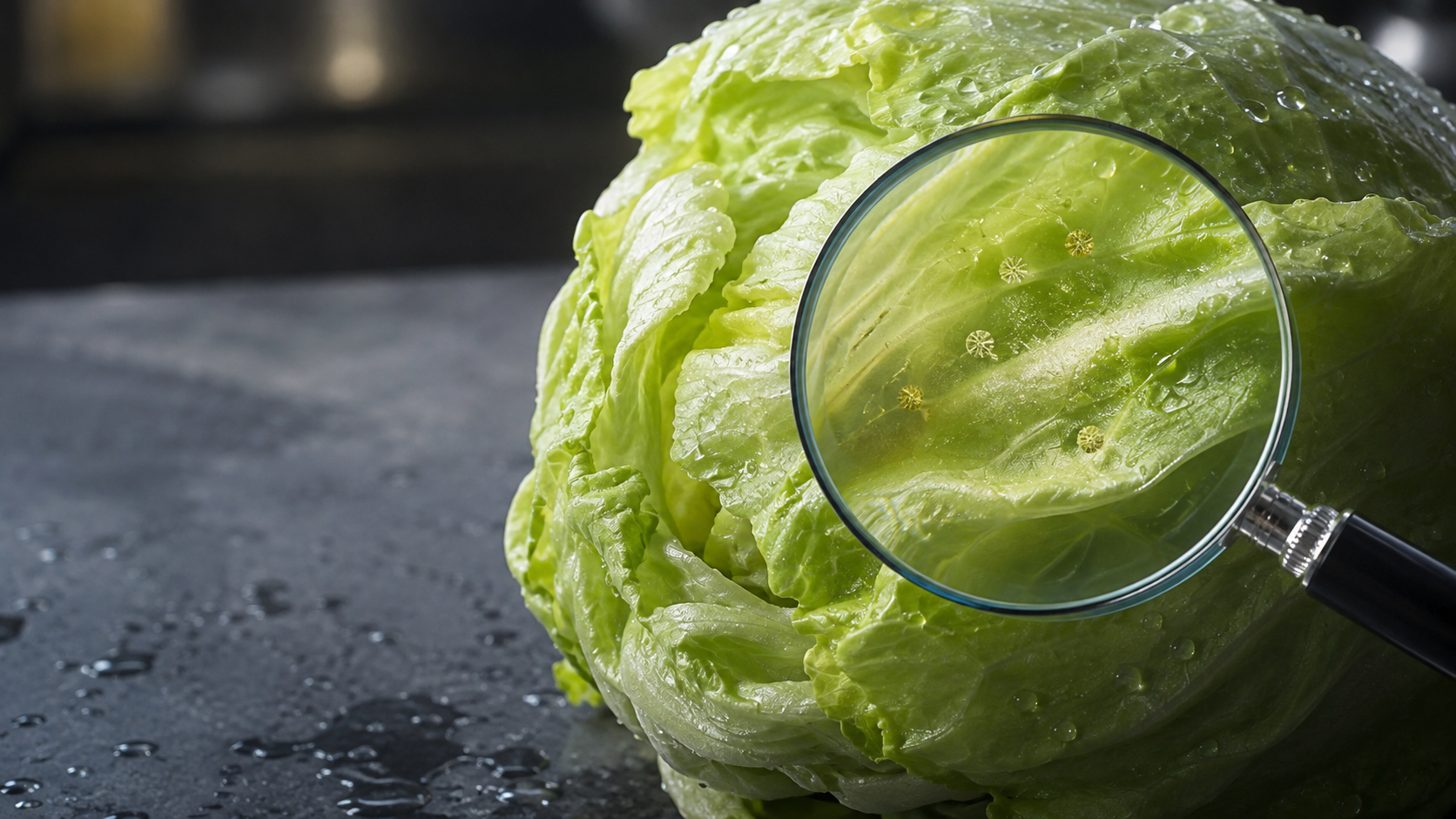
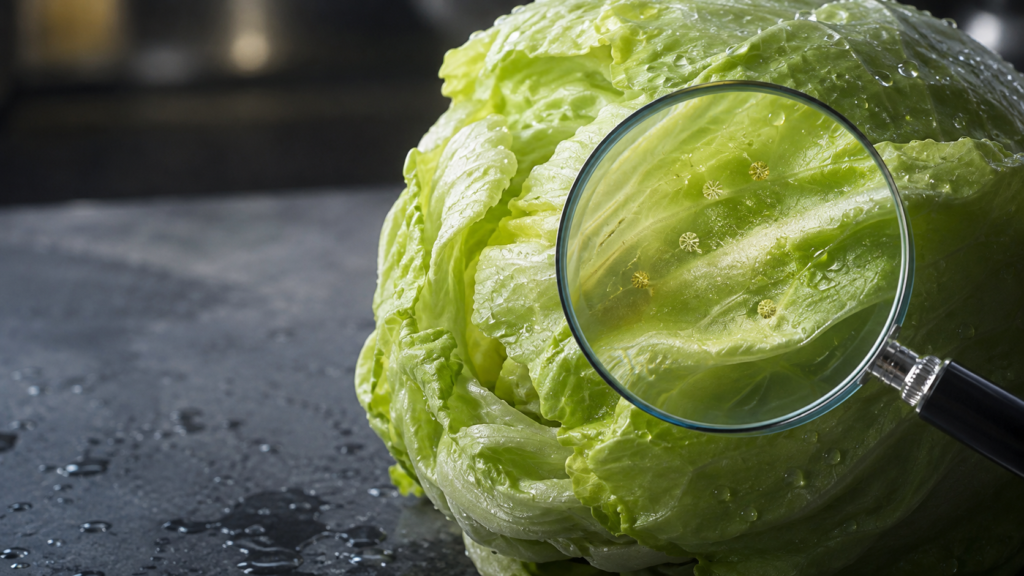
Lettuce is supposed to be the responsible item on your plate. It is green, low-calorie and usually arrives with the quiet confidence of something that has never met a deep fryer. But fresh produce can occasionally carry an unwelcome microscopic passenger: Cyclospora cayetanensis. This single celled parasite causes an intestinal illness called cyclosporiasis, best known for prolonged watery diarrhea, fatigue and symptoms that may disappear only to return days later.
Cyclosporiasis is not a new disease, but seasonal outbreaks regularly bring it back into public attention. The infection is particularly puzzling because a salad may look fresh, smell normal and even be washed before it reaches the plate.
How does a parasite too small to see reach fresh produce? Why can routine testing miss it? And does washing lettuce actually protect you?
What Is Cyclosporiasis?
Cyclosporiasis is an infection of the small intestine caused by Cyclospora cayetanensis. People become infected after swallowing the parasite in contaminated food or water.
The parasite enters the digestive tract in a hardy form called an oocyst and invades cells lining the small intestine, disrupting normal absorption. It requires a specific prescription treatment when medication is needed.
The illness occurs worldwide but is more common in tropical and subtropical regions. In countries such as the United States, cases may be associated with international travel or with domestically consumed fresh produce.
How Does Cyclospora Reach Fresh Produce?
Cyclospora spreads when food or water becomes contaminated with microscopic traces of human fecal matter containing the parasite.
Contamination can potentially occur wherever water, sanitation, harvesting and food handling meet. Possible routes include contaminated irrigation or washing water, poor sanitation near growing areas, or contact with contaminated equipment and surfaces.
Modern produce passes through growers, processors, distributors, restaurants and retailers. Investigators compare patient interviews with supply-chain records to trace illnesses to a common source.
Leafy vegetables and herbs can be especially difficult to clean because their folds, crevices and uneven surfaces give microscopic material many places to remain. Produce is often eaten raw, so it does not receive the heat treatment that would kill the parasite.
Why Direct Person-to-Person Spread Is Unlikely
Cyclospora has an unusual biological delay built into its life cycle.
When an infected person passes oocysts in stool, those oocysts are not immediately infectious. They must remain in the environment and mature—a process called sporulation—before they can infect another person. The CDC says this maturation is thought to require at least one to two weeks under favourable conditions.
Because of that delay, Cyclospora is unlikely to spread directly from one person to another in the way that some stomach viruses do. The greater public-health concern is environmental contamination that eventually reaches water or food.
What Are the Symptoms of Cyclosporiasis?
The most characteristic symptom is frequent watery diarrhea. It may be accompanied by:
- Loss of appetite
- Weight loss
- Stomach cramps or pain
- Bloating and increased gas
- Nausea
- Fatigue
- Body aches or headache
- A low-grade fever
- Vomiting, although this is less common
Some infected people develop no symptoms. For those who do, illness usually begins around one week after exposure, although the CDC gives a possible range from about two days to two weeks or longer.
That delay makes source tracing difficult. Someone who becomes ill today may need to remember every salad, herb and restaurant meal eaten during the previous two weeks.
Why Can the Illness Disappear and Return?
Untreated cyclosporiasis can last from several days to more than a month. A particularly frustrating feature is its remitting-relapsing pattern: diarrhea and other symptoms may improve temporarily and then return.
Persistent diarrhea can cause dehydration and interfere with nutrient absorption. Medical evaluation is especially important when diarrhea is severe, prolonged, bloody, accompanied by high fever, or causing dizziness, very little urination or unusual weakness.
Why Routine Tests May Miss Cyclospora
Cyclosporiasis cannot be diagnosed from symptoms alone. Many infections and digestive disorders cause diarrhea, cramps and nausea.
Doctors usually diagnose the illness by testing a stool sample. However, a standard ova-and-parasite examination may not reliably detect Cyclospora unless the laboratory is specifically asked to look for it or uses a molecular gastrointestinal panel that includes it.
Because the parasite may be shed intermittently, a single negative result may not exclude infection. A healthcare professional may request specimens collected on different days.
People with prolonged watery diarrhea should tell their clinician about recent travel, consumption of raw produce, restaurant meals and any known food recall. Mentioning Cyclospora specifically can help the clinician choose an appropriate test.
Hydration is important. People who cannot keep liquids down, become confused or show signs of serious dehydration require prompt medical care.
Does Washing Lettuce Remove Cyclospora?
Washing fresh produce under running water is still worthwhile. It can reduce dirt and some microorganisms, and the CDC recommends washing fruits and vegetables before eating, cutting or cooking, even when a package says “pre-washed.” Firm produce such as cucumbers and melons can be scrubbed with a clean produce brush.
However, washing cannot guarantee the removal of Cyclospora from leafy or irregular surfaces. Routine chemical sanitizers may not reliably kill its hardy oocysts either.
Washing is therefore a risk-reduction step, not a microscopic force field.
Cooking is more reliable. The CDC advises that heating food to at least 158°F or 70°C kills the parasite. Of course, few people want lettuce cooked into submission. That is why supply-chain sanitation, safe irrigation water and rapid recalls remain essential.
What Should You Do During a Food Recall?
A recall changes the advice. Washing a recalled product does not make it safe.
Consumers should follow the exact CDC or FDA notice, check brand names, package sizes, lot information and use by dates, and discard or return affected products. Refrigerators, containers, utensils and surfaces that touched the food should be cleaned according to official instructions.
Readers should check the latest FDA investigation update rather than relying on an old social-media graphic.
How Can You Reduce the Risk?
No household method can make raw produce completely risk-free, but sensible food practices reduce exposure:
- Follow official food-recall notices and never eat recalled produce.
- Wash hands with soap and water before and after preparing food.
- Rinse fruits and vegetables thoroughly under running water.
- Wash produce even when the package says it was pre-washed.
- Scrub firm produce with a clean brush.
- Remove damaged or bruised areas.
- Keep raw produce separate from raw meat and dirty utensils.
- Refrigerate cut or peeled produce promptly.
- Use safe water when washing or preparing food, particularly while travelling.
- Cook produce when practical if contamination is a concern.
Travellers to regions where cyclosporiasis is common should be particularly cautious with untreated water, raw herbs, leafy vegetables and fruit that cannot be peeled.
The Larger Lesson Hidden in a Salad Bowl
Cyclosporiasis shows why “fresh” and “safe” are not exactly the same word. A food can look flawless while carrying something invisible, and a quick rinse cannot correct contamination that occurred earlier in a complex supply chain.
Still, panic is not the answer. Most fresh produce is not contaminated, and fruits and vegetables remain an important part of a healthy diet. The practical response is to follow recalls, handle food carefully and seek medical advice when watery diarrhea persists or returns.
Cyclospora may be microscopic, but it leaves recognizable clues: delayed symptoms, recurring illness, links to raw produce and the need for specialised testing. Recognising those clues can shorten the journey from “perhaps it was something I ate” to the right diagnosis and treatment.
Frequently Asked Questions
Is cyclosporiasis contagious?
Direct person-to-person transmission is considered unlikely because Cyclospora oocysts must mature in the environment before becoming infectious.
How quickly do symptoms begin?
Symptoms usually start about one week after exposure, but they can begin within roughly two days to two weeks or longer.
Can washing vegetables prevent cyclosporiasis?
Thorough rinsing reduces risk but cannot guarantee removal of Cyclospora, especially from leafy produce with folds and crevices. Recalled produce should be discarded or returned, not washed and eaten.
Can cyclosporiasis go away without treatment?
It sometimes resolves without medication, but symptoms may last for weeks or repeatedly return. Anyone with prolonged or severe diarrhea should contact a healthcare professional.
What test detects Cyclospora?
Diagnosis usually requires a stool test that specifically includes Cyclospora. More than one specimen may sometimes be needed.
What medicine treats cyclosporiasis?
TMP-SMX is the CDC-recommended treatment of choice. It must be prescribed by a qualified healthcare professional.
Read other articles at https://infopillstv.com