
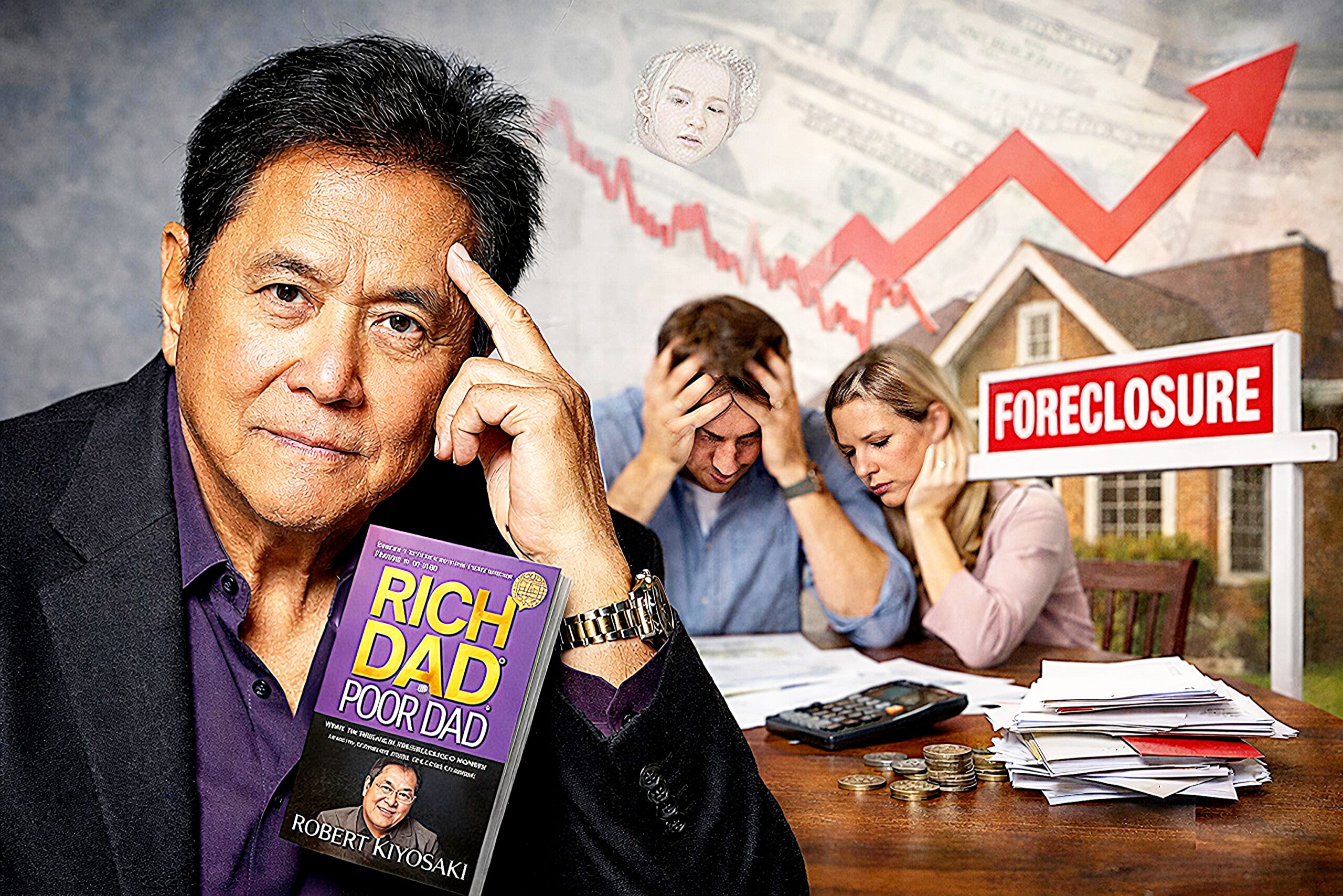
Robert Kiyosaki often says the middle class is not struggling because people are lazy or careless, but because they were never properly taught how money works. Many middle-class families work hard, earn honestly, and save regularly, yet still feel stressed about their finances. This article explores the reasons behind this struggle and highlights the mindset shifts that Kiyosaki believes can help people take better control of their financial future.
Who Is Robert Kiyosaki and Why His Perspective Matters
Robert Kiyosaki is known for challenging conventional wisdom surrounding finance, he questions whether the traditional advice of “study hard, secure a stable job, and save” remains effective in today’s economic landscape. His insights prompt individuals to reevaluate long-held habits that may no longer serve them well, particularly amid escalating inflation, rising equated monthly installments (EMIs), and job insecurity.
- Reliance on a Single Income Stream
Many middle-class families depend on one paycheck. If that source of income is disrupted—be it through illness, layoffs, or retirement—financial strain often follows swiftly. Kiyosaki views this dependence as perilous and advocates for the gradual development of additional income sources, even if they are modest, to reduce reliance on one employment situation.
- Taxation That Penalizes Earners Rather Than Investors
Individuals earning salaries face taxation before accessing their funds. Conversely, investors and entrepreneurs typically pay taxes after deducting expenses. This results in the middle class laboring hard while a significant portion of their earnings is allocated to taxes upfront. Kiyosaki emphasizes that understanding tax implications is as crucial as generating income—a topic rarely covered in traditional education.
- Misconception of Bad Debt as “Smart Lifestyle Choices”
Purchases like homes, vehicles, electronics, and luxury goods are often financed through EMIs and labeled as “assets.” According to Kiyosaki, if an item consistently takes money out of your pocket each month, it does not contribute positively to your financial growth. The middle class frequently accumulates long-term debt merely to sustain a lifestyle that gradually depletes wealth over time.
- Insufficient Financial Literacy in Educational Institutions
While subjects such as mathematics, science, and history are taught in schools, financial management is not part of the curriculum. Consequently, individuals often learn about loans, credit cards, and investments only after making costly errors. Kiyosaki argues that this lack of early financial instruction leaves many in the middle class confused and fearful when making monetary decisions.
- Excessive Focus on Saving Instead of Investing
Though saving money can seem secure, relying solely on savings often results in diminished value due to inflation over time. The prevailing attitude encourages the avoidance of risk by keeping funds in fixed deposits or savings accounts; however, Kiyosaki contends that while this approach may protect capital from immediate loss, it hinders substantial growth over time.
- Aversion to Risk and Fear of Failure
Numerous middle-class families shy away from risks because they perceive failure as threatening. However, Kiyosaki notes that wealthy individuals also encounter failures but use these experiences as learning opportunities. The hesitation to make mistakes can prevent people from exploring new revenue-generating ideas or investment opportunities—even those with manageable risks.
- Trading Time for Money Instead of Making Money Work for You
Typically, individuals exchange their time for money—putting in more hours leads to increased stress without necessarily improving financial security. Kiyosaki believes genuine financial independence arises when money begins generating income independently through assets rather than solely through laborious effort.
What Insights Can the Middle Class Gain from These Observations?
Kiyosaki’s message isn’t an encouragement to abandon jobs or engage recklessly; rather it advocates for a shift in perspective—gaining knowledge about finances while questioning established norms can foster greater awareness around money matters. Simple actions like learning investment fundamentals or monitoring cash flow can lead to meaningful improvements.
Critique of Robert Kiyosaki’s Perspectives (Balanced Outlook)
Not everyone aligns with Kiyosaki’s viewpoints; some believe his recommendations oversimplify complex realities or do not apply uniformly across different income brackets. It is essential not merely to adopt his advice blindly but instead adapt valuable lessons according to individual financial circumstances and comfort zones.
Conclusion: Is the Middle Class Truly Losing at the Financial Game?
The struggles faced by the middle class stem not from a lack of diligence but from outdated principles regarding money management. While Robert Kiyosaki’s concepts might be unsettling for some readers, they serve as vital reminders about fostering awareness around finances—a necessity rather than a luxury in today’s economic environment.
FAQs
Why does Robert Kiyosaki say the middle class is struggling financially?
He believes the middle class struggles not because of lack of effort, but because most people are never taught how money truly works.
Does Robert Kiyosaki think working hard is not important?
No. He respects hard work, but says hard work alone is not enough without financial knowledge and smart money decisions
Is saving money a bad habit according to Kiyosaki?
Saving is important, but Kiyosaki warns that saving alone may not protect wealth from inflation over time.
Why does Kiyosaki criticize debt so often?
Because many people take on long-term debt for lifestyle needs, which quietly reduces their ability to build wealth.
Do you need to be rich to follow Kiyosaki’s advice?
No. His ideas focus more on mindset and financial awareness than on how much money you earn.
Is Robert Kiyosaki’s advice relevant in today’s economy?
Yes. With rising costs, higher EMIs, and job uncertainty, his message about financial education feels more relevant than ever.
Read other articles at: https://infopillsTV.com/